Commercial Kitchen Deep Cleaning in Oshawa
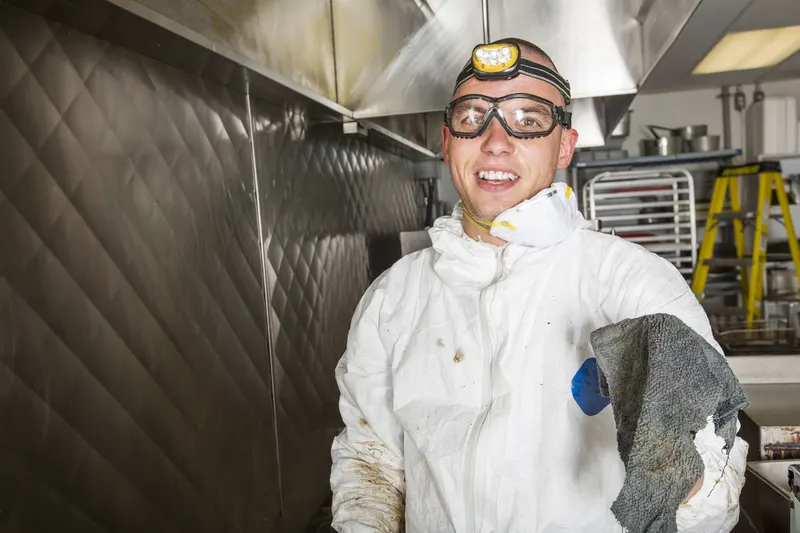
Commercial Kitchen Deep Cleaning in Oshawa is a scheduled degreasing of everything behind the cook line that a nightly close never reaches: fryer cabinets, range interiors, combi oven seals, salamanders, wall cladding, ceiling panels, floor drains and the floor beneath fixed equipment. Oshawa Hood Cleaning books the work overnight or between services, degreases each surface to bare metal or bare tile, photographs every zone and hands over a dated record a Durham Region Health Department inspector can read. Kitchens in Oshawa, Courtice, Bowmanville and Newcastle are quoted per kitchen after a walk-through.
What a deep clean covers behind an Oshawa cook line
Equipment cavities. Fryer cabinets below the vat, the space behind the range where the gas line enters, the underside of the flat-top, the cavity beneath the charbroiler and the salamander brackets. Grease runs there when it leaves the cooking surface, and nobody looks between one equipment move and the next.
Combi ovens and closed equipment. Door seals, drain lines and the fan housing inside the cavity. A combi that smells on preheat has grease in the seal or the drain.
Walls, ceilings and the grid. Stainless cladding to its top edge, the wall above it, the ceiling panels over the line, the grid that holds them, and the lights and sprinkler heads set into it.
Floors and drains. The floor under and behind every fixed unit, the coving, the floor drains along the line with their trap baskets, and the grout lines that hold the smell after the tile is clean.
Deep clean vs nightly close in an Oshawa kitchen
A closing crew and a deep clean are not the same job, and a kitchen that runs both is not paying twice.
| Surface | Nightly close | Deep clean vs close: the difference |
|---|---|---|
| Fryers | Oil filtered, vat wiped, exterior wiped. | Unit pulled, cabinet and floor beneath degreased, gas connection and casters cleaned. |
| Ranges and flat-tops | Top scraped, grates soaked, drip tray emptied. | Burners lifted, oven cavity and underside degreased, back and sides to bare metal. |
| Walls behind the line | Splash zone wiped to arm height. | Full height to the ceiling, seams and fastener heads, wall behind each unit. |
| Ceiling above the line | Not touched. | Panels, grid, light lenses and sprinkler escutcheons degreased or flagged for replacement. |
| Floors and drains | Swept, mopped, drain cover rinsed. | Floor under fixed units, coving, grout lines and trap baskets degreased and deodorised. |
The nightly close keeps a kitchen safe to open tomorrow. The deep clean keeps it safe to inspect and safe from fire.
Where to find commercial kitchen cleaning services near me in Oshawa that work around service
Oshawa Hood Cleaning schedules deep cleaning in the window a kitchen already has, which is different for a pub, a franchise line and a residence kitchen.
Independent restaurants and pubs. The window opens after last call and closes before the first prep cook arrives. The crew works to a zone plan, so if a night runs short the line is still usable at handover and the remaining zones roll to the next night.
Franchise and quick-service lines. Late close, early open, short window. Equipment to be pulled is listed in advance, and the head office often wants the photographs in its own format.
Institutional kitchens. A residence, a hospital or a school cafeteria cannot close, so the deep clean goes into the gap between dinner clean-down and breakfast prep, or into a scheduled break, booked weeks out.
The segments and what each needs from its paperwork are laid out on the who we serve page.
Best deep kitchen cleaning in Oshawa for a Durham Region Health Department inspection
Oshawa Hood Cleaning writes the zone plan and the photo record so they answer the questions a public health inspector asks, in the order the inspector asks them.
Durham Region Health Department inspects food premises in Oshawa, Courtice, Bowmanville and Newcastle, and the findings that come up behind the line are the ones a deep clean addresses: grease on walls and ceilings, soiled floor and wall junctions, debris beneath and behind equipment, and floor drains that are not clean. An inspector who lifts a fryer and finds a clean floor has one less item to write.
The dated photographs by zone show the condition before and after and when it was done, which is what an operator needs when a follow-up inspection or a franchisor audit asks for evidence rather than assurance.
Degreasing behind the line is fire prevention, not housekeeping
A cook line fire starts at the cooking surface and travels along whatever grease it can find. The exhaust system is the path most people think about, and the hood and filters, duct run and rooftop fan pages cover it. The second path is the wall behind the range, the ceiling above it and the cavity beneath the fryer, where a film of grease sits a few inches from an open flame every service.
Degreasing those surfaces removes the fuel, and it means the suppression nozzles above the line discharge onto clean equipment rather than a coated surface that keeps burning under the agent. The standard the fire inspector works from is on the NFPA 96 page; the deep clean is the part of compliance that happens below the hood.
How much does commercial kitchen cleaning cost in Oshawa in 2026?
Oshawa Hood Cleaning quotes commercial kitchen deep cleaning per kitchen after a free walk-through, based on the equipment to be pulled, the condition of the walls, ceiling and floor, and the number of overnight windows needed, with the written quote back within 24 hours.
Condition sets the number more than size does. A twelve-foot line that has never had its ceiling cleaned takes longer than a twenty-foot line on a six-month schedule. The quote separates a first reset from a recurring schedule, because the second is priced lower per visit once the baseline exists.
A deep clean booked on the same night as a hood cleaning shares the window and the access arrangements, and is quoted lower than the two done separately. The services hub matches a problem to a page, and coverage is on the areas served page.
Next step: call 289-274-5331 or request a written quote. Say how many pieces of equipment sit on the line and when the wall behind them was last seen.
Commercial kitchen deep cleaning in Oshawa: frequently asked questions
Does the equipment get moved, or cleaned in place?
Pulled where it can be. Fryers, ranges and flat-tops on casters or flexible gas connections are moved out, the cavity behind them degreased, and the unit put back and reconnected. Equipment on hard gas lines or fixed plumbing is cleaned in place as far as reach allows, and the quote lists which units fall into each group.
Can a kitchen that never closes get a deep clean?
Yes. A residence, hospital or campus kitchen that serves three meals a day is cleaned in the gap between dinner clean-down and breakfast prep, split across as many nights as the gap allows, with the zone plan guaranteeing a working line at each handover. Those windows are booked weeks ahead because they cannot move.
What products are used behind the line?
Alkaline degreasers suited to stainless, tile and painted surfaces, applied with dwell time and rinsed, with food-contact surfaces rinsed and dried before handover. Ceiling panels that have absorbed grease over years do not come back and are flagged for replacement instead.
Is this the same as a regular janitorial contract?
No. A janitorial contract covers floors, bins, washrooms and front of house on a daily or weekly cycle. A deep clean is periodic degreasing of the equipment cavities, walls, ceiling and drains that a janitorial crew is not equipped for. Many Oshawa kitchens run both.
How often should a cook line be deep cleaned?
It depends on what the line cooks and how many hours it runs. A charbroiler and fryer line running lunch and dinner seven days a week loads its walls and ceiling in a few months; a residence kitchen on a steamed and baked menu takes longer. The walk-through sets a recurring interval from the condition found.